Ashwagandha: What the Science Actually Says (and What It Doesn't)
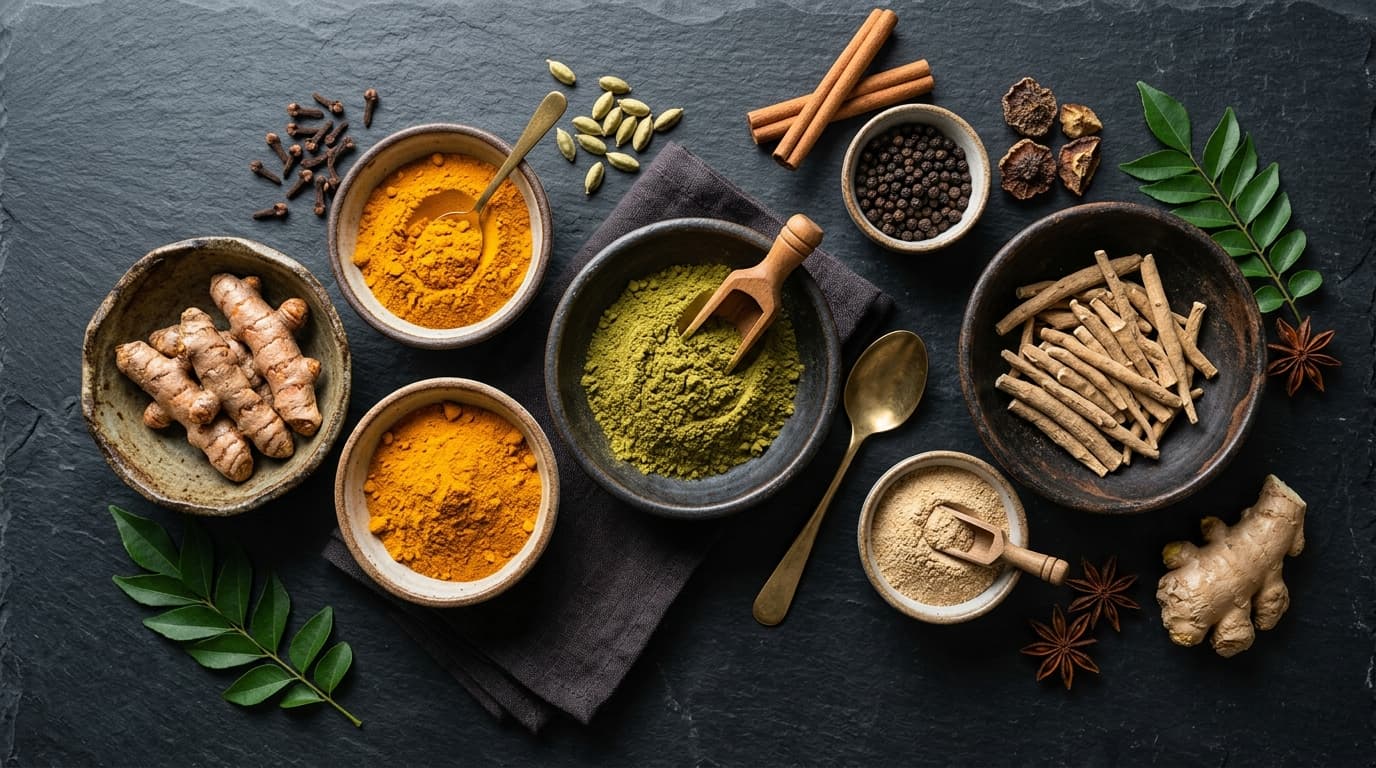
Published by Lifestyle with Ayurveda | Educational Content
Disclaimer: This article is for educational purposes only. IMPORTANT: Do not take Ashwagandha if you are pregnant, have thyroid conditions, autoimmune disorders, or take SSRIs, blood pressure, or blood sugar medications without first consulting your doctor.
Walk into any pharmacy, supermarket, or supplement shop today and you will find Ashwagandha (Withania somnifera) in at least a dozen forms: gummies, capsules, powders, lattes, chocolates, and even face serums. The marketing claims range from "stress relief" to "testosterone booster" to "brain enhancer" to "sleep support." Spend ten minutes on social media and someone will be crediting it for transforming their life.
But what does Ashwagandha actually do? What does the clinical evidence show — and, just as importantly, what doesn't it show? What are the real risks, and who should genuinely be cautious?
This is the honest, evidence-based, Ayurveda-contextualized guide to one of the most famous and misunderstood herbs on Earth.
A 3,000-Year Introduction
Ashwagandha has been used in Ayurvedic medicine for at least 3,000 years. Its name in Sanskrit means "smell of horse" (ashwa = horse, gandha = smell) — a reference both to the distinctive earthy odour of its roots and to the belief that the herb imparts the strength and vitality of a horse to those who take it.
In the classical Ayurvedic texts, Ashwagandha is classified as a Rasayana — a rejuvenating tonic, a class of herbs considered capable of promoting longevity, improving memory, enhancing immunity, and restoring vitality to a depleted system. It is particularly associated with Vata pacification: it is warming, grounding, and nourishing — the opposite of Vata's cold, dry, mobile qualities.
It is also classified as an adaptogen — a term coined in 1947 by Soviet pharmacologist N.V.
Lazarev to describe substances that help the body adapt non-specifically to various stressors (physical, chemical, biological, emotional). Modern adaptogen research has largely confirmed that Ashwagandha meets this functional definition.
🌿 Struggling to find balance? Discover if your symptoms are linked to your dominant dosha by taking the 2-minute quiz at myvaidya.co.
The Active Compounds: Withanolides and More
The primary bioactive compounds in Ashwagandha are withanolides — steroidal lactones unique to the genus Withania. The most studied of these is withanolide A, along with withaferin A, which has been studied for its effects on cancer cells in laboratory settings (note: this is vastly different from claiming Ashwagandha is a cancer treatment — it is emphatically not).
Other relevant compounds include alkaloids (somniferine, somnine), saponins, flavonoids, and iron.
The concentration of withanolides in any given product is a critical variable — this is why two brands selling "500 mg Ashwagandha capsules" can have dramatically different effects, and why standardized extracts (specifying withanolide percentage) are generally preferred in clinical research.
What the Clinical Evidence Actually Shows
Let us go through the major studied benefits of Ashwagandha, separated by strength of evidence.
✅ STRONG EVIDENCE: Stress and Anxiety Reduction
This is the most robust area of clinical support for Ashwagandha. Multiple randomized, double-blind, placebo-controlled trials (the gold standard in clinical research) have shown statistically significant reductions in:
- Cortisol levels (the body's primary stress hormone), with reductions of 14–28% in several trials.
- Perceived stress scores on validated scales like the Perceived Stress Scale (PSS) and Hamilton Anxiety Scale.
- Self-reported anxiety across multiple trials.
A 2019 study published in Medicine (a peer-reviewed journal) found that 240 mg/day of a standardised Ashwagandha extract significantly reduced cortisol, stress, and anxiety over 60 days compared to placebo. A 2012 study in the Indian Journal of Psychological Medicine showed similar results at 300 mg twice daily.
The mechanism appears to involve modulation of the hypothalamic-pituitary-adrenal (HPA) axis — the stress response system — and possibly GABA receptor activity, which explains the calming effect.
Evidence rating: Evidence-supported for stress and anxiety reduction in short-term use.
✅ MODERATE EVIDENCE: Sleep Quality
Several trials have found Ashwagandha to improve sleep quality in people with insomnia or stress-related sleep disruption. A 2019 RCT found that 600 mg/day for 10 weeks improved sleep quality, sleep onset, and morning alertness compared to placebo.
The mechanism is thought to involve the compound triethylene glycol found in Ashwagandha leaves, which induces sleep through GABA pathways, and the general cortisol-lowering effect, which allows the nervous system to settle at night.
Evidence rating: Mixed/moderate evidence — promising results in specific populations (primarily those with stress-related sleep disruption).
⚠️ EMERGING EVIDENCE: Physical Performance and Testosterone
A number of studies have looked at Ashwagandha's effects on:
- Muscle strength and recovery: A well-cited 2015 study found that men who took 300 mg twice daily showed significantly greater increases in muscle strength and size compared to placebo over an 8-week resistance training programme.
- VO2 max (cardiorespiratory endurance): Some trials have found modest improvements in endurance athletes.
- Testosterone: Some trials in men with low fertility or under stress found modest increases in testosterone levels. However, these effects are not consistently replicated, and the evidence base is still limited.
Evidence rating: Emerging/mixed evidence. Do not take for performance goals without understanding the full safety profile.
⚠️ INSUFFICIENT EVIDENCE: Cognitive Enhancement, Cancer Support, Autoimmune Conditions
These are areas where Ashwagandha is heavily marketed but where the evidence is still largely preclinical (lab studies) or very early-stage human trials. Do not base health decisions on these claims.
Safety: What You Must Know Before Starting
This is not a section to skim. Ashwagandha's safety profile has some important nuances that the supplement industry rarely advertises prominently.
General Tolerability
For most healthy adults, Ashwagandha is considered safe for short-term use (up to 3 months in most clinical trials). Common mild side effects include:
- Drowsiness (particularly when taken at high doses or with other sedatives).
- Nausea and stomach upset, especially on an empty stomach.
- Loose stools or diarrhoea at higher doses.
- Headaches.
⚠️ Serious Concerns: Liver Injury
As of 2021–2024, there are multiple case reports in peer-reviewed literature describing cholestatic liver injury associated with Ashwagandha supplementation.
In most cases, the injury resolved after stopping the supplement. However, the mechanism is not fully understood, and the risk — while rare — is real.
This underscores the importance of:
- Taking breaks from supplementation (not using continuously for more than 3 months without a break).
- Avoiding Ashwagandha if you have pre-existing liver conditions.
- Not exceeding recommended doses.
⚠️ Thyroid Interactions
Ashwagandha has been shown in clinical studies to increase thyroid hormone levels (both T3 and T4).
For someone with Hashimoto's thyroiditis or hypothyroidism who is already on thyroid medication (like levothyroxine), this could push thyroid hormone levels too high — a condition called hyperthyroidism or thyrotoxicosis. This is a clinically significant interaction that requires physician oversight.
⚠️ Medication Interactions
Known or suspected interactions:
- SSRIs, benzodiazepines, and sedatives: Ashwagandha has GABAergic effects and may potentiate these drugs.
- Blood pressure medications: Ashwagandha may lower blood pressure — additive effect with antihypertensives.
- Blood sugar medications (diabetes drugs, insulin): Ashwagandha may lower blood sugar — additive hypoglycaemic risk.
- Immunosuppressants: Ashwagandha stimulates immune function — potentially counteracting drugs used after organ transplant or for autoimmune conditions.
⚠️ Pregnancy
Ashwagandha is not recommended during pregnancy. Classical Ayurvedic texts note it as potentially abortifacient (capable of causing miscarriage) at certain doses. Avoid completely during pregnancy and lactation.
⚠️ Autoimmune Conditions
Because Ashwagandha stimulates the immune system, it could theoretically aggravate autoimmune conditions like rheumatoid arthritis, lupus, or multiple sclerosis. Use only under medical supervision if you have any autoimmune diagnosis.
The Ayurvedic Perspective on How to Take It
Ashwagandha's traditional form of consumption in Ayurveda is markedly different from the capsule form that dominates the market.
Ashwagandha Milk (Ashwagandha Ksheera)
The classical preparation involves simmering the root powder in milk — a process called Ksheerapaka. The fat in milk serves as what Ayurveda calls an Anupana (carrier or vehicle), driving the herb's active compounds deeper into the tissues, particularly the reproductive and nervous tissues (Shukra dhatu and Majja dhatu), where Ashwagandha is said to do its most profound work.
A simple recipe:
- Bring 1 cup of organic milk (or an unsweetened plant-based alternative) to a gentle simmer.
- Add 1/4 to 1/2 teaspoon of high-quality Ashwagandha root powder.
- Simmer on low heat for 10 minutes, stirring.
- Remove from heat. Add a pinch of cardamom, a small amount of honey (after it cools slightly), and a scraping of nutmeg if desired.
- Drink before bed.
This combination — Ashwagandha in warm milk before sleep — is one of the most ancient and most clinically relevant preparations. It addresses both the stress-reduction and sleep-support applications simultaneously.
Dosage
Modern clinical research has used daily doses ranging from 125 mg to 600 mg of standardised extract, with the 300–600 mg range showing the most consistent results. If using traditional root powder (which is less concentrated than extracts), traditional usage suggests 3–6 grams of powder per day, divided into doses.
The critical variable is withanolide content. Look for products that specify their withanolide percentage (typically 2.5–5% for standardised extracts, and up to 35% for highly concentrated ones).
How to Cycle
Most Ayurvedic and integrative medicine practitioners recommend cycling Ashwagandha — 3 months on, 2–4 weeks off — rather than taking it indefinitely. This prevents the body from becoming habituated to its effects and reduces the risk of cumulative side effects.
Choosing Quality: What to Look For
The Ashwagandha supplement market is crowded and largely unregulated. Here is what separates a quality product from a questionable one:
| Feature | What to Look For |
|---|---|
| Extract type | "KSM-66" or "Sensoril" are proprietary root extracts with multiple human clinical trials backing them. These are the most studied and most reliable. |
| Withanolide content | Specified on the label (not just "proprietary blend"). |
| Third-party testing | Certificate of Analysis (COA) available from independent labs (e.g., NSF, USP, ConsumerLab). |
| Heavy metal testing | Especially important for root powders sourced from India — ensure they test below the USP limits for lead, arsenic, cadmium, and mercury. |
| Organic certification | Reduces pesticide residue risk. |
| Form | Root extract preferred over leaf extract for most purposes (the leaf contains more withaferin A, which at high doses may have cytotoxic properties). |
An Honest Summary
Ashwagandha is a genuinely remarkable herb with real, clinically documented benefits for stress, anxiety, and sleep when used appropriately. It is not a miracle supplement that will transform every aspect of your health, but it is a well-studied, time-tested adaptogen with an excellent safety record when used correctly by appropriate individuals.
The key caveats: it is not for everyone, it interacts with several categories of medication, it should be cycled rather than used indefinitely, and quality matters enormously. The best results come from treating it as one component of a holistic lifestyle — not as a standalone solution.
Frequently Asked Questions
Q: How long does Ashwagandha take to work?
A: Most clinical trials showing significant results run for 8–12 weeks. You may notice improved sleep and mood within 2–4 weeks, but the full adaptive and tonic effects take longer to accumulate.
Q: Can I take Ashwagandha in the morning or only at night?
A: Either works, but taking it with warm milk at night takes advantage of both its sleep-supporting properties and its traditional carrier (Anupana). If you are taking it in the morning, have it with breakfast to reduce the risk of stomach upset.
Q: I've heard Ashwagandha raises testosterone. Should men take it?
A: Some trials have found modest testosterone increases, primarily in men with lower baseline levels or those under physical stress. It is not a testosterone replacement therapy and should not be approached as one. If you have hormonal concerns, consult an endocrinologist.
Is Ashwagandha Right for Your Prakriti?
In Ayurvedic terms, Ashwagandha is most beneficial for Vata and Kapha types, and for Pitta types in moderation (because it is warming, it can occasionally aggravate Pitta at high doses). Understanding your constitution helps you understand whether and how to use it.
🌿 [Take Our Prakriti Quiz to See If Ashwagandha Aligns With Your Dosha Profile]
This is educational content, not medical advice. Please consult a licensed healthcare provider before starting Ashwagandha if you take any medication or have any underlying health condition.
Sources: Examine.com - Ashwagandha | NIH/PubMed - Clinical Trials | Harvard Health - Herbal Supplements | Healthline - Ashwagandha Safety | NCCIH - Herb Safety | Medicine Journal 2019 | Indian Journal of Psychological Medicine 2012