Seasonal Eating Basics (Ritucharya): How to Eat for the Earth's Cycles
Published by Lifestyle with Ayurveda | Educational Content
Disclaimer: Dietary advice provided is for educational purposes only. If you have specific medical dietary restrictions, please consult a registered dietitian or healthcare provider before making major changes.
In the modern world, the supermarket looks the same in December as it does in July.
We can buy tomatoes in the dead of winter and heavy root vegetables in the blazing heat of summer. We are accustomed to eating the exact same diet, drinking the exact same iced coffee, and expecting the exact same energy levels 365 days a year.
Ayurveda views this modern convenience as a fast track to physical imbalance and disease.
The core philosophy of Ayurveda is that the human body is a microcosm of nature. We are not separate from the environment; we are made of the exact same five elements (Space, Air, Fire, Water, Earth).
When the seasons change, the balance of those elements in the environment shifts dramatically. If we do not shift our internal environment to match, we experience friction. That friction manifests as seasonal allergies, winter weight gain, summer acidity, and autumn anxiety.
The Ayurvedic practice of adapting your diet and lifestyle to the changing seasons is called Ritucharya (Ritu meaning season, and Charya meaning regimen or discipline).
Here is how to align your body with the earth's natural cycles.
The Three Seasons of Ayurveda
While Western calendars recognize four seasons, Ayurveda primarily divides the year according to which Dosha is most dominant in the environment.
🌿 Struggling to find balance? Discover if your symptoms are linked to your dominant dosha by taking the 2-minute quiz at myvaidya.co.
1. Vata Season (Late Autumn and Early Winter)
The Environment: As the leaves fall and the wind picks up, the environment becomes cold, dry, light, and erratic. This is the peak accumulation of Vata (Air and Space). How it feels in the body: You may experience dry skin, cracking joints, constipation, erratic digestion, and an increase in anxiety, restlessness, or insomnia.
The Dietary Strategy: Warm, Heavy, and Moist To survive the cold and dry Vata season, you must introduce warmth and moisture. This is not the time for raw salads, iced smoothies, or dry crackers.
- Favor: Root vegetables (sweet potatoes, carrots, beets), winter squashes, heavy grains (oats, brown rice), thick soups, and stews.
- Cooking method: Slow-cooked, baked, or boiled. Everything should be served hot.
- Fats: This is the most important season for healthy fats. Cook with generous amounts of ghee, sesame oil, or olive oil to lubricate the tissues and ground the nervous system.
- Spices: Warming, grounding spices like ginger, cinnamon, nutmeg, and black pepper.
- Reduce: Raw vegetables, cold foods, dry snacks, and excessive caffeine (which mimics Vata's erratic energy).
2. Kapha Season (Late Winter and Spring)
The Environment: As the snow melts and the spring rains arrive, the earth becomes wet, heavy, cold, and muddy. This is the peak of Kapha (Earth and Water). How it feels in the body: The heavy, wet qualities of spring often manifest as sluggishness, lethargy, seasonal allergies, sinus congestion, mucus accumulation, and winter weight that is hard to shed.
The Dietary Strategy: Light, Dry, and Pungent (Spicy) To counteract the heavy, wet mud of spring, you must introduce lightness, dryness, and heat. This is the traditional time for cleansing and lightening the diet.
- Favor: Bitter greens (dandelion, kale, arugula), sprouts, light grains (millet, buckwheat, quinoa), and legumes.
- Cooking method: Steamed, lightly sautéed, or even some raw foods (as the weather warms up).
- Fats: Minimize heavy fats, dairy, and oils during this season. Kapha does not need extra lubrication.
- Spices: This is the time to spice heavily! Chili, black pepper, dry ginger, garlic, mustard seeds, and turmeric help stimulate the sluggish digestion and clear congestion.
- Reduce: Heavy dairy (cheese, cold yogurt), refined sugar, heavy wheat pastas, and cold, sweet foods (like ice cream). Sweet, sour, and salty tastes all increase Kapha.
3. Pitta Season (Late Spring and Summer)
The Environment: The days are long, the sun is intense, and the heat is inescapable. This is the peak of Pitta (Fire and Water). How it feels in the body: The intense heat can lead to excessive sweating, acid reflux, heartburn, skin rashes, inflammation, and a short temper (feeling "hangry" or irritable).
The Dietary Strategy: Cool, Sweet, and Hydrating To survive the heat of summer without burning out, you must introduce cooling, hydrating qualities. This is the one season where raw foods and salads are highly medicinal.
- Favor: Cooling, water-rich foods. Cucumbers, watermelon, sweet berries, leafy greens, coconut water, zucchini, and mint.
- Cooking method: Raw, blanched, or lightly cooked. Food is best served at room temperature or slightly cool (but avoid ice-cold, which shocks the digestion).
- Fats: Use cooling fats like coconut oil or a moderate amount of ghee.
- Spices: Favor cooling and digestive spices like coriander, fennel, cardamom, and fresh mint.
- Reduce: Pungent, sour, and salty foods. This means minimizing hot sauce, chilies, raw garlic, tomatoes, vinegar, and alcohol. These foods are essentially liquid fire in a Pitta season.
The Transition Periods (Ritusandhi)
The most vulnerable time for your immune system is not the dead of winter or the peak of summer; it is the 14-day window between seasons. In Ayurveda, this transition period is called Ritusandhi.
During these two weeks, the body is forced to rapidly adjust its internal thermostat and digestive capacity. This is when people most frequently catch colds, get the flu, or experience digestive upset.
How to handle the transition:
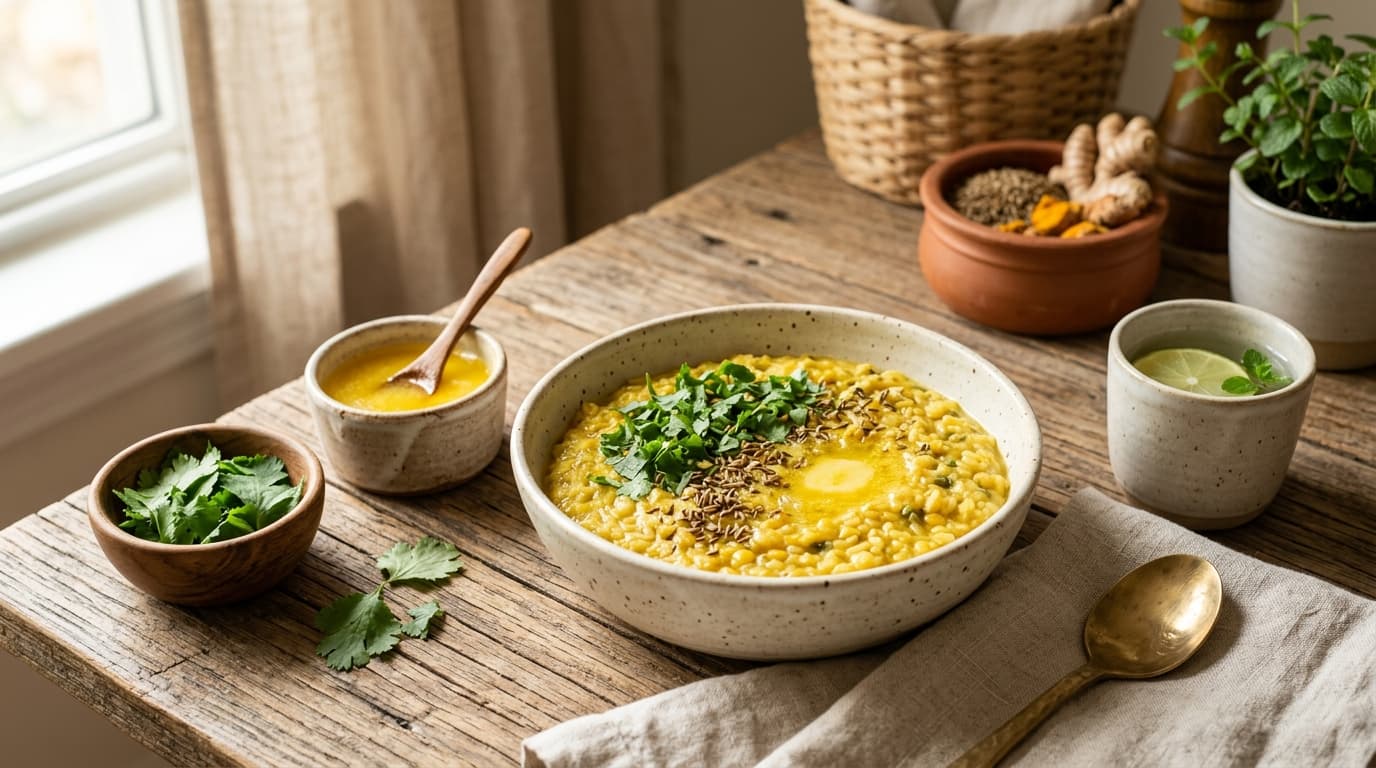
- Eat lighter: Do not overwhelm your digestion as it recalibrates. Favor simple, easily digestible foods like Kitchari (a mix of basmati rice and mung beans), light soups, and steamed vegetables.
- Prioritize sleep: Give your body the rest it needs to manage the environmental shift.
- Gradually phase out: Do not switch from a heavy winter diet to a light spring diet overnight. Over the course of the two weeks, slowly reduce the heavy winter foods and slowly introduce the lighter spring foods.
The Ultimate Hack: Eat What Grows Locally
If trying to memorize the Doshas and their corresponding food lists feels overwhelming, there is a much simpler, foolproof way to practice Ritucharya: Eat what is growing in your local environment right now.
Nature is profoundly intelligent. It naturally produces the exact foods we need to balance the current climate:
- In the cold, dry autumn, the earth produces heavy, grounding, moist root vegetables and squashes.
- In the hot summer, the earth produces cooling, water-rich melons, berries, and cucumbers.
- In the heavy, wet spring, the earth produces bitter, astringent, light greens and sprouts that help detoxify the body.
If you shop at a local farmers' market, or simply buy the produce that is actively in season in your region, you are automatically practicing Ayurvedic seasonal eating.
You do not need to fight the environment. By changing your diet as the earth changes its seasons, you allow your body to ride the wave of nature, rather than swimming against the current.
🌿 [Curious how your specific Dosha reacts to the different seasons? Take our Prakriti Quiz to get a personalized, seasonal eating guide!]
Sources: Banyan Botanicals - Ritucharya | Kerala Ayurveda - Seasonal Guidelines | Chopra Center - Eating for the Seasons | Charaka Samhita - Sutrasthana